

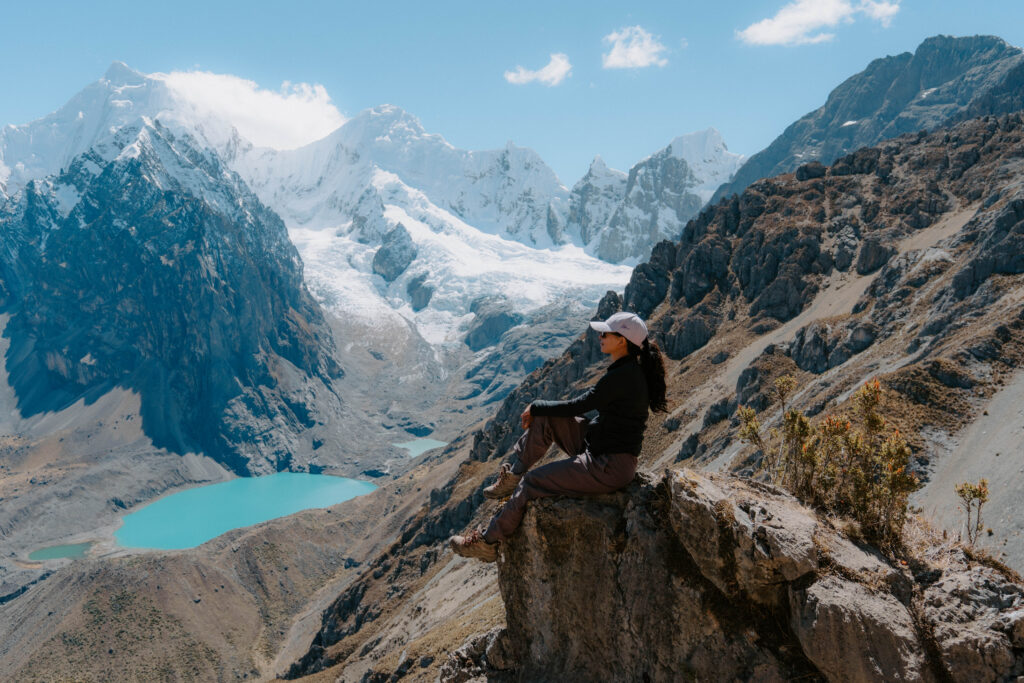
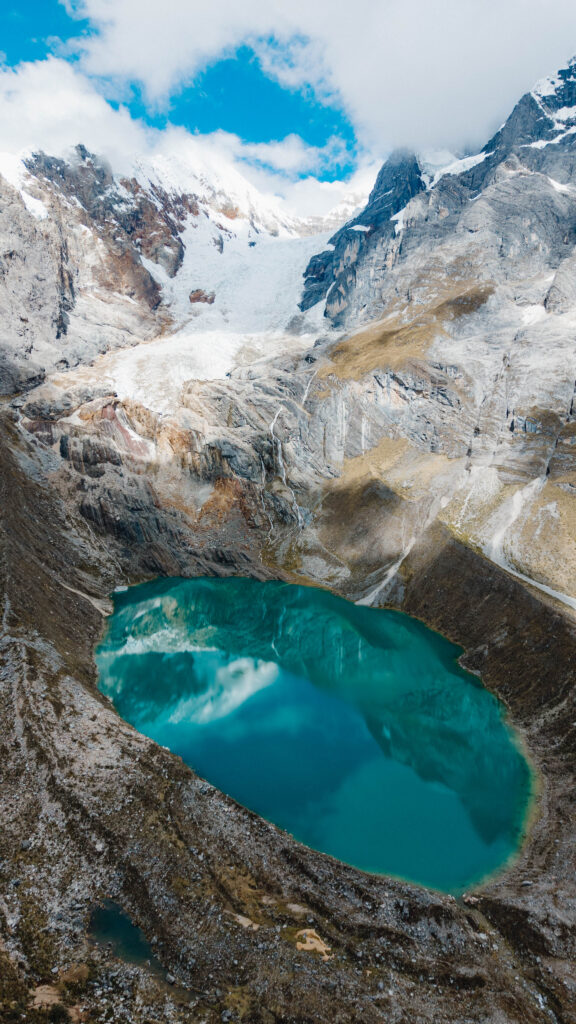
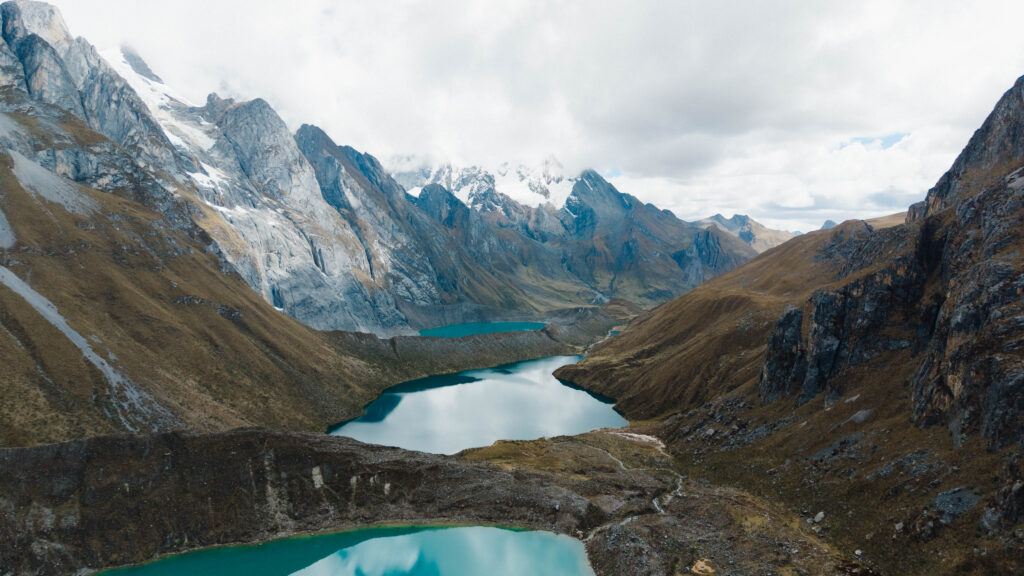
Trekking the Cordillera Huayhuash Circuit is truly a once in a lifetime experience. This remote trail in the Andes is surrounded by towering snowy peaks, glaciers, blue lakes, and beautiful valleys. I have to admit, this trek ignited a fire in me that I didn’t know I had but it also humbled me BIG TIME. I thought I was hot sh!t back home, I usually hike faster than anybody I know but I was passed up by people more than double my age on the trail. After completing a trek like this I feel so proud of what I am capable of and hopefully, if you visit you will also feel the same.
Disclaimer: This post contains affiliate links. If you purchase through these links, I may make a small commission at no additional cost to you. Thanks for your support!
Where is the Cordillera Huayhuash?
The Corillera Huayhuash is located in the Ancash region of Peru, north of Lima. The nearest town to base yourself out of is Huaraz which is accessible by a 10 hr bus or 40 min flight from Lima. My friend and I opted to fly LATAM which we were happy about since the buses are known to have frequent delays. Getting to the trailhead from Huaraz is a 5 hr bus ride which was provided by the trekking company.
The morning of the trek we had a 3 am wake up call. Our hotel had breakfast packed up for us in the lobby & we were picked up promptly by a large air conditioned bus. When we hopped in, the energy from our group was non-existent as you can imagine. I think Maximo (our main guide) tried to hype up the team but quickly realized nobody wanted to chit chat at 3am. The bus was large & relatively comfortable with seats that reclined. It was also half full so a lot of us had rows to ourselves to try and get some sleep.
Meeting the Team
We stopped for breakfast 3 hours in, once coffee was on the table our group slowly started to speak to each other. Our group was an interesting bunch, you’ve got a woman in her 70’s with quite the trekking resume from New Mexico, a young couple from Washington State who got engaged on the trek, 3 ladies from South Africa who are mountaineers and ultramarathon runners (wtf did we get ourselves into), and a father and son from Canada who’s hiking pace is faster than me speed walking at sea level (we’re fked). Then there’s Dasha and I, the slowest of the bunch.
Quick Overview of the Trek
Thank you to my type-A friend Dasha for keeping track of all the stats with Strava. Admittedly, I only took a quick glance of the itinerary & thought “sh!t, that looks hard”, put the deposit down and hoped for the best.
🏔️ Highest altitude: 16,585 ft on Day 4 (higher than many 14ers by over 2,500 feet).
🥵 Biggest climb: Day 6 with 4,485 ft of ascent.
🦵 Longest day: Day 5 at 10.84 miles.
⬇️ Biggest descent: Day 5 with 5,436 ft downhill—your quads were probably screaming.
📏 Total distance: 63.59 miles.
⛰️ Total elevation gain: 20,476 ft (about climbing from sea level to well above Denali Base Camp).
⬇️ Total descent: 21,393 ft
Is the Huayhuash Trek for you?
The Huayhuash Trek is not something that should be taken lightly, while you don’t need any technical skills to accomplish this, you do hike & sleep above 14,000 feet (4267 meters) almost daily. Some things to ask yourself if you’re going to do this hike:
Am I okay with hiking 5-7 hrs everyday?
Am I okay with waking up at 5:30 am everyday?
Am I okay with sleeping in high altitude in below freezing temps? (Ps. I was plenty cozy with my gear but it SUCKED having to get out of the tent to pee!) At least the stars were beautiful 🙂
Am I okay with going up 15-16,000 foot (some over 5,000 meters!) passes over and over again?
Are you okay with going without electricity or wifi for 8 days? The campsites do have “emergency” Starlink wifi & electricity but you have to pay cash, usually around 20 soles.
What about descending down these passes? How are your knees?
If your answer is YES then it’ll be an epic journey for you. I’ll be honest I’ve never done anything this hard but it felt so good to challenge myself and really see what I was capable of. Doing a trek like this not just challenges your body but also your mind, which is really the most important one to control on a trip like this.
Best Time to Trek the Cordillera Huayhuash
The best months to do the Huayhuash trek is from May to September during the drier months. We went in July and the skies were clear almost the whole trip. There were times when we got a little bit of rain & hail for short periods that’s why I recommend packing a rain shell even if you’re going during dry months.
What to Pack for the Cordillera Huayhuash Trek
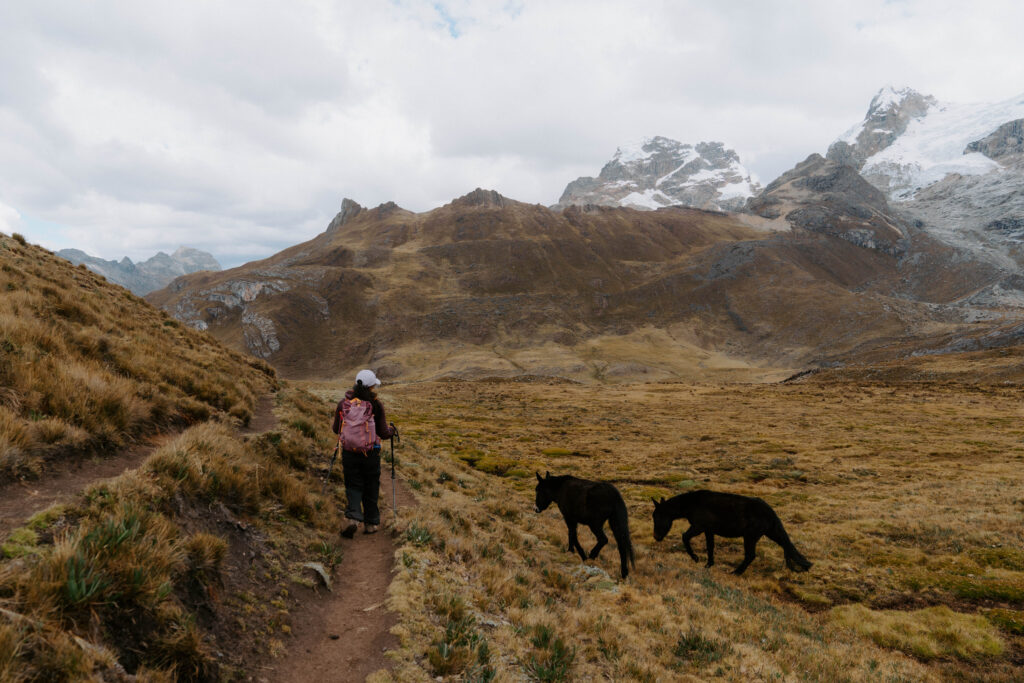
Gear can really make or break trips, so here’s what I was happy I brought & what I wish I packed.
- Anker Power Bank to charge your devices
- Merino Wool Base Layer: OKAY this made a huge difference & kept me warm when we were in higher elevation. Bonus, it’s odor resistant which you’ll really love when you haven’t showered in days. I know it’s sooo expensive but I was really happy I bought these.
- Wool Thermal Bottoms: I would recommend bringing one pair of these for sleeping
- Down Jacket
- Lightweight Jacket
- Rain Shell
- Daypack with hydration sleeve. I love this one because there are so many pockets. It’s like a trailrunner/backpack all in one
- Wilderness Wipes: Sadly this will be the closest you’ll have to a shower, except for day 5!
- UV Sunglasses
- Sun Hoodie
- Prana Hiking Pants
- Camp Pillow
- Camp Shoes
- Ear plugs (in case of barking dogs or hikers snoring)
- Hiking boots or trail runners
- Beanie
- Gloves
What I wish I brought: - A kindle : There’s so much time at camp and a book is too much weight to be bringing on the trek.
- Zinc Mineral Sunscreen: I brought regular sunscreen but the sun at that altitude is so brutal it wasn’t enough.
- Lightweight backpacking towel: There are rivers you can wash up in and these towels will come in handy
Other gear like trekking poles, sleeping bag, liner, etc can be rented from your trekking guide for an extra fee.
Training & Acclimating For the Huayhuash Trek
I’m generally a pretty active person who strength trains regularly so I didn’t do too much training aside from upping my cardio and doing longer hikes at home. Some things that helped a lot is acclimating in Huaraz (elevation 10k feet) for 4 nights & doing day hikes from there. My friend and I also took Diamox which we got from Peru, this helped tremendously. We only felt mild symptoms from altitude. I am not a medical professional so talk to your Dr. about taking Diamox.
PS: If you’re looking for a great hotel in Huaraz, San Sebastian felt like a little oasis in the city.
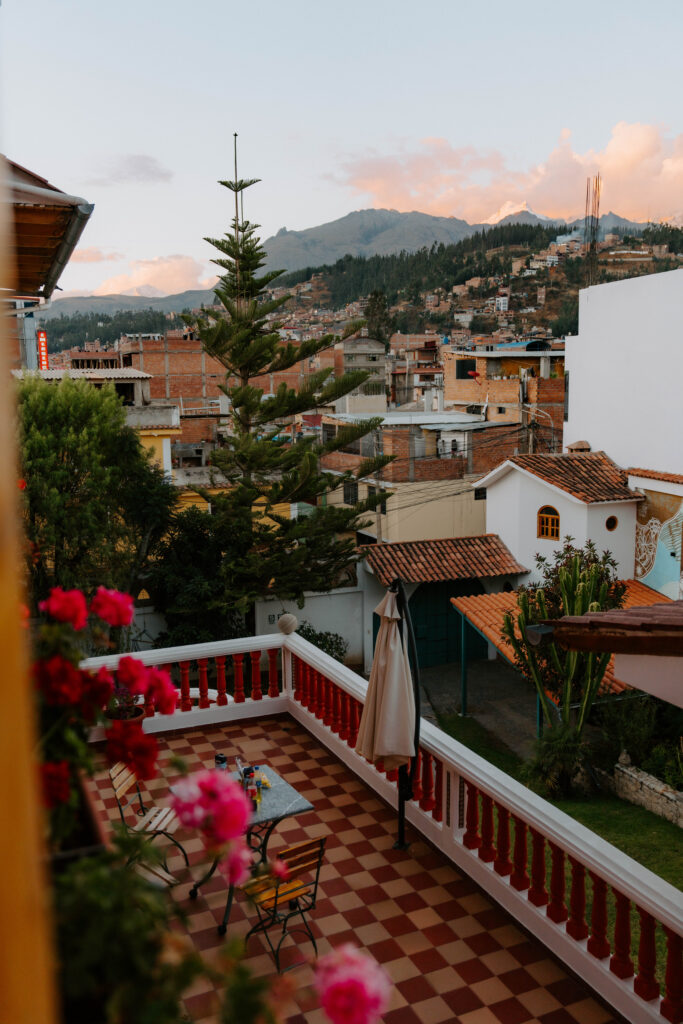
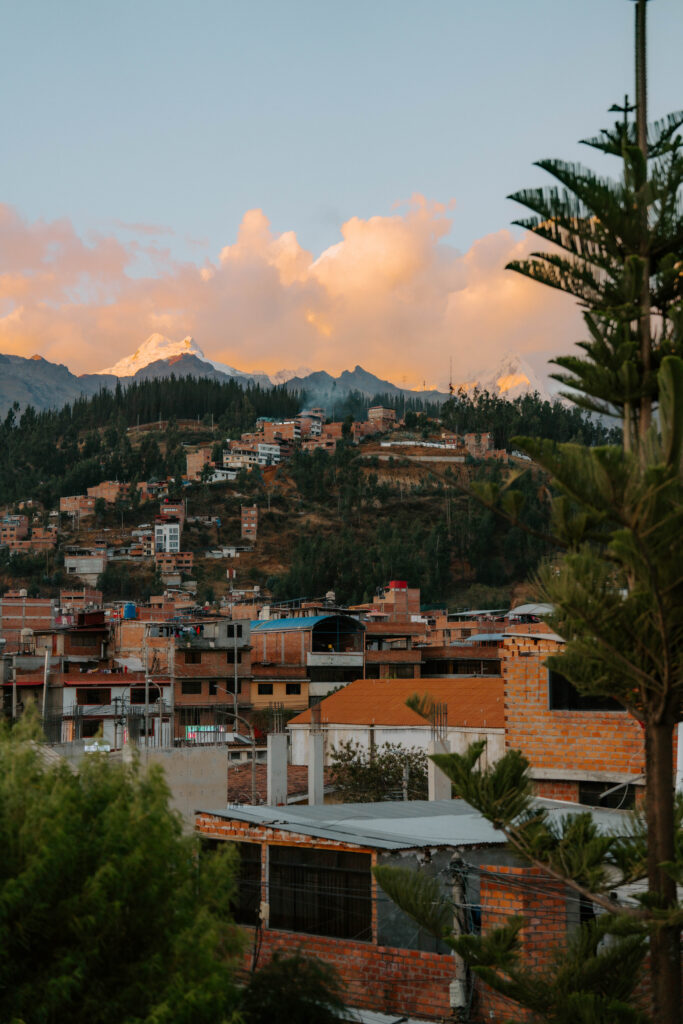
Day Hikes From Huaraz
Laguna Llaca
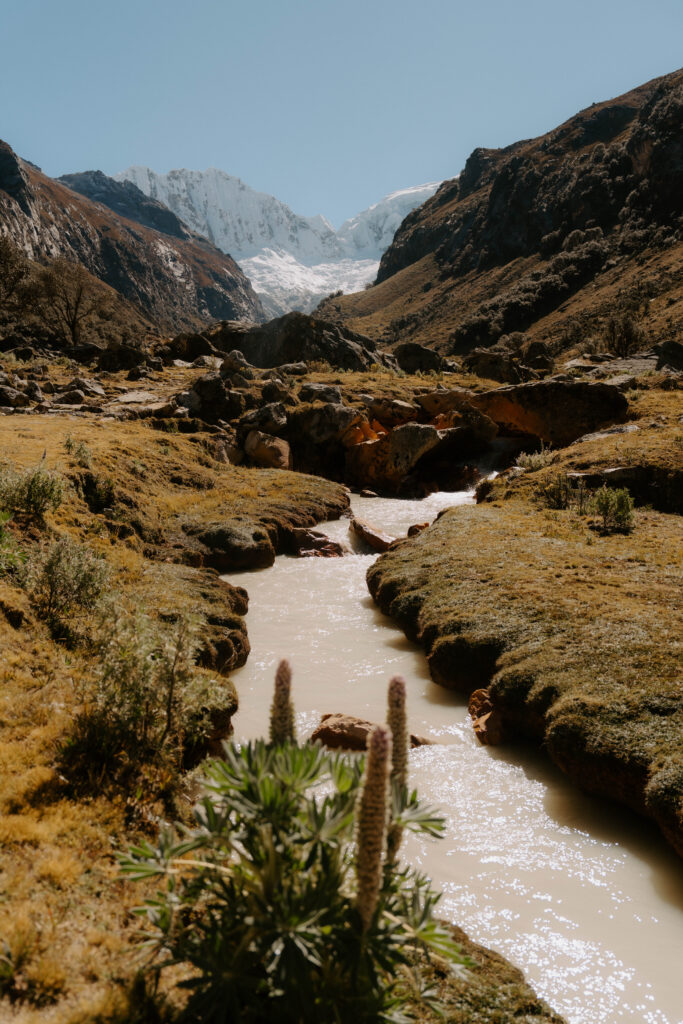
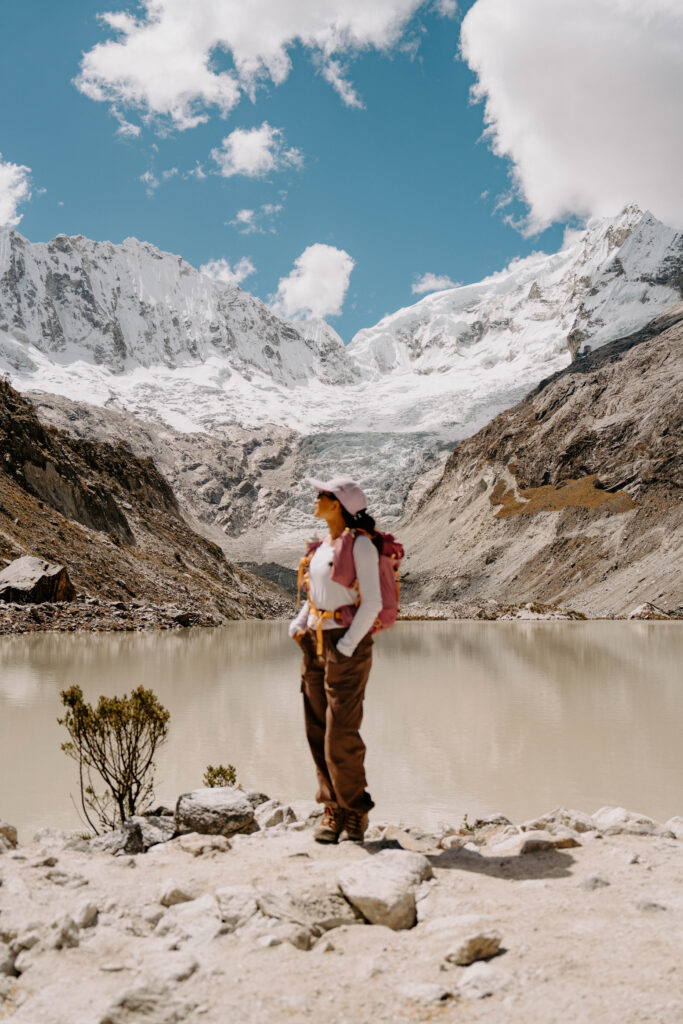
Located about an hour and a half from Huaraz & only accessible by private taxi, it is quite the gem and we only ran into one person on the trail the whole time. I would recommend this as your first day hike since it’s short and mostly flat except for a short switchback at the end. Warning: Some of the cows here are very hostile.
5 miles (8 km) round-trip
958 ft of elevation gain
Elevation start & end 4,230 to 4,474 meters
Laguna Churup
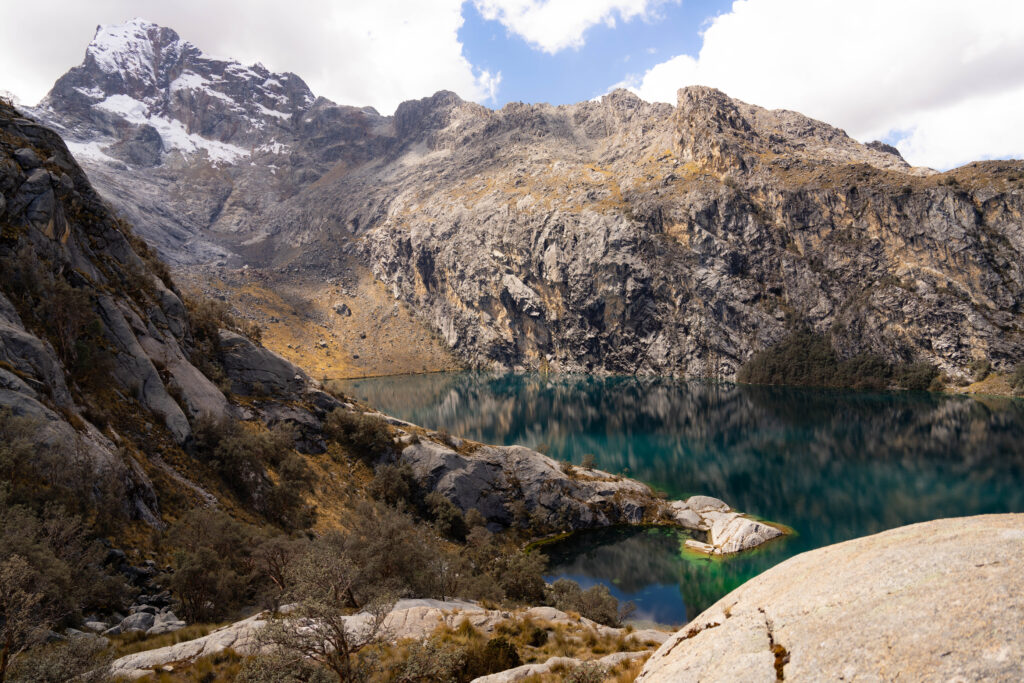
Anyone who tells you to do Churup as your first acclamitization hike actually hates you. Laguna Churup should be done on day 2 or 3 because this hike is STEEP. At times you’re actually climbing a bit with a rope. The lake is beautiful though and great training for the passes on Huayhuash. Getting here is easy with taxis and shared shuttles as options.
4.3 miles (7 km) round-trip
2,000 ft elevation gain (ouch)
14,600 ft elevation
Note: Bring cash with you on hikes to pay the National Park Fee (30 soles each hike)
Cordillera Huayhuash: Unguided VS Guided
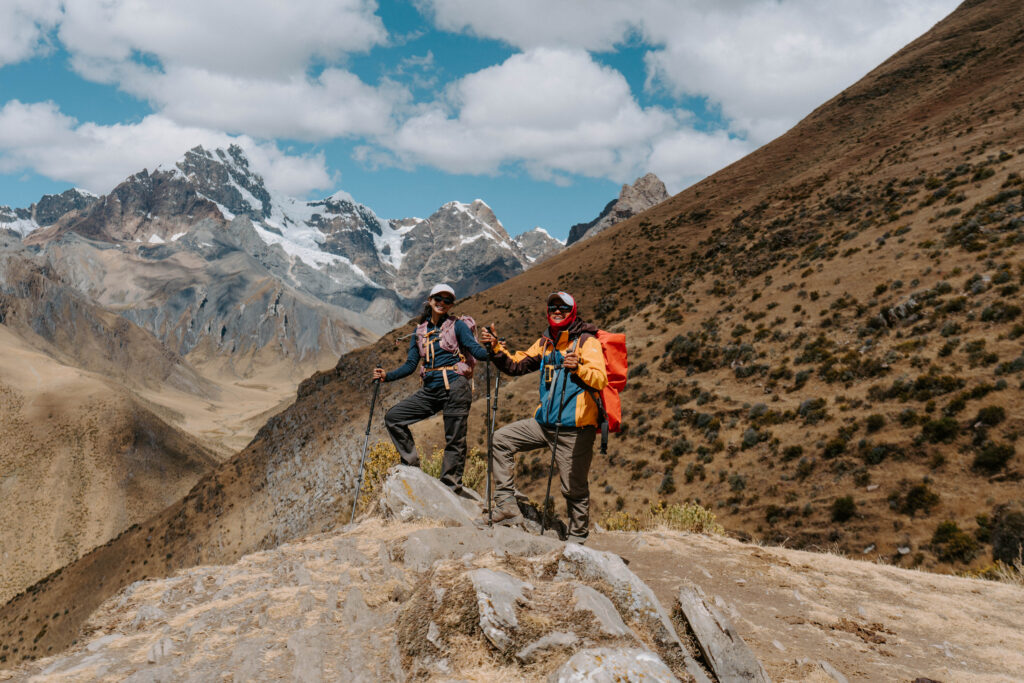
We chose to go with a guide for many reasons but the main one is that we don’t hate ourselves. Why make something hard even harder? When you go with a guiding company you don’t have to carry your camping gear, set up your tent, and you have cooks preparing nutritious meals (no freeze dried meals!). If you plan on trekking on your own you must be experienced with navigation since there’s no signal at any point & comfortable carrying all your weight. Personally it was an easy choice for me and we were very happy with our guides (Maximo and Urbano) from Inkaland Treks.
Some notes about our guides: There’s something really nice about going with guides who really know the area, our guide Maximo was educating us on the native plants and wildlife along the way. He was also constantly one step ahead and always checking in on us. One time I was on my way to wash my feet in the river and he boiled some water so I could clean my feet in something warm, it’s those little things that really make a difference.
Something else to consider when you’re going with a group is pace. Some will be faster/slower. Ask your trekking company how many guides you get per group. We noticed other groups where slower hikers were pretty much left behind 20-30 minutes away from their guides. For us, we had 2 guides so they would sometimes split up according to pace.
Cost of a Guided Trek
We paid $900 per person at the time we booked our trek. The price has since increased to $1,150 for the 8 day Trapecio route. The team consisted of 2 guides, 3 cooks, 3 donkey drivers and about 15 donkeys, keep this in mind when you’re bringing cash for tips!
The Campsites on the Huayhuash Trek
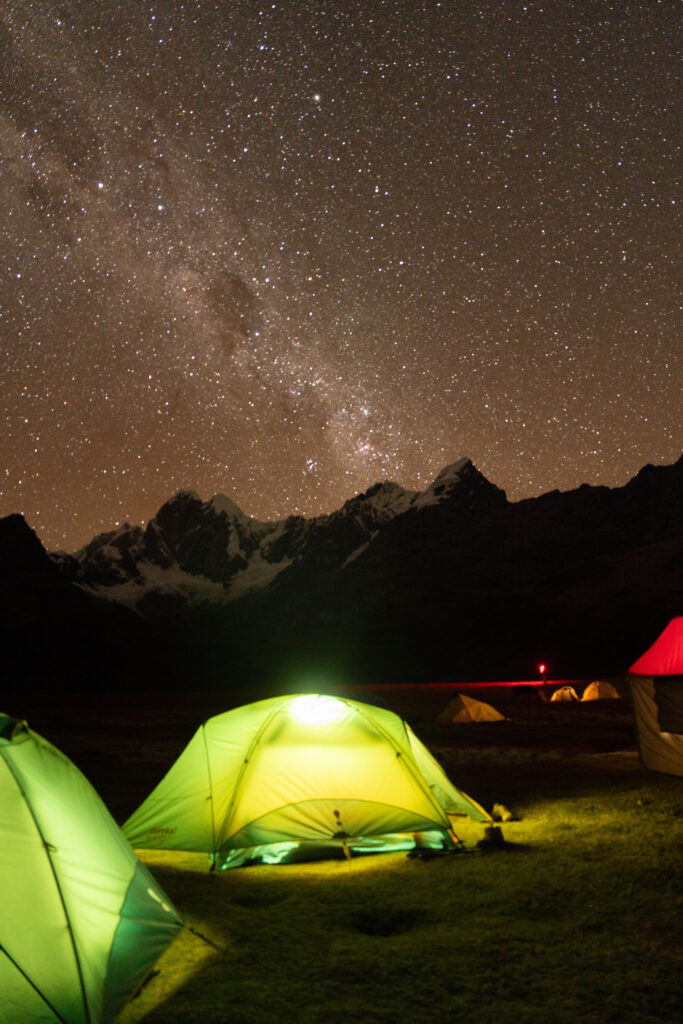
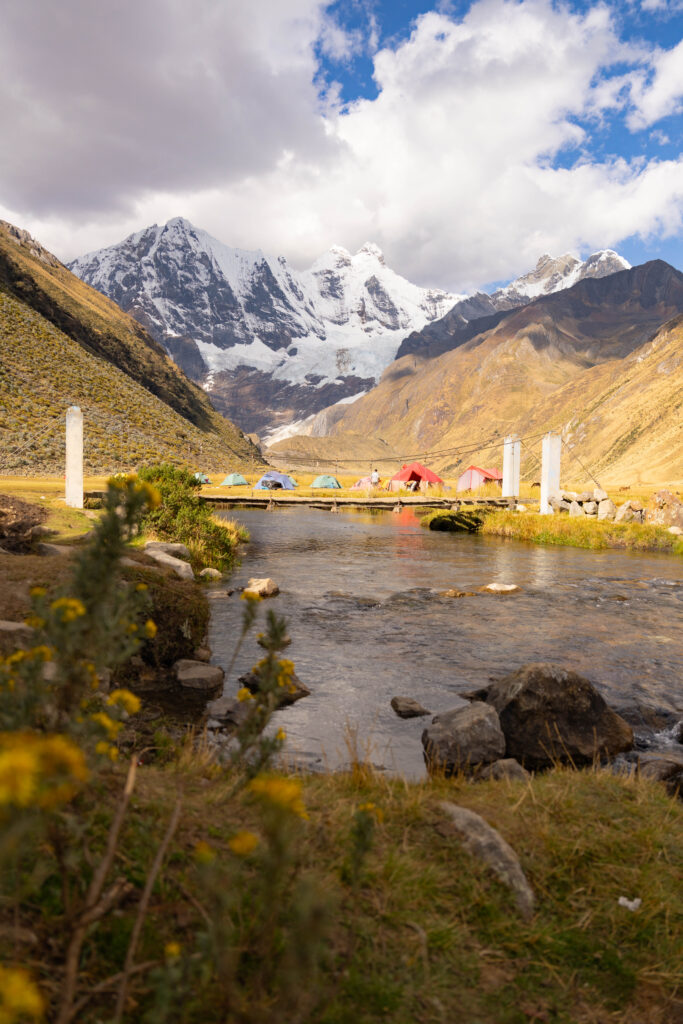
The campsites were a highlight of the trip for me. They were always somewhere scenic, with mountain views and a body of water. Horses and burros frolic around camp after a days worth of work. I was pleasantly surprised there were flushing toilets in every camp, a luxury we don’t have in the US. These campsites and toilets are managed by the local community and they cleaned them daily. I mentioned this earlier but bring cash in case you need to use electricity or wifi for emergencies.
One of my favorite parts of camp was having teatime in the large canopy. After hiking for hours, relaxing here with unlimited tea and snacks was glorious. The tea selection consisted of coca tea, muña tea which I swear is a laxative (I won’t elaborate further), chamomile, and orange black tea.
Day 5: Option to sleep in a Hotel
Day 5 is the only day where you’ll be in a more proper town, on this day you have the option to stay in a hotel with a shower or camp in a soccer field. After 5 days of no shower I think the choice is obvious. My friend and I also saw a tarantula near camp further validating our decision. It was 40 soles ($12 usd) cash for a private hotel room which is so reasonable. They also had wifi so it was nice to connect with our loved ones back home. This stay honestly gave me an energy boost to continue on especially since the next day is the highest ascent on the trek.
Meals on the Huayhuash Trek
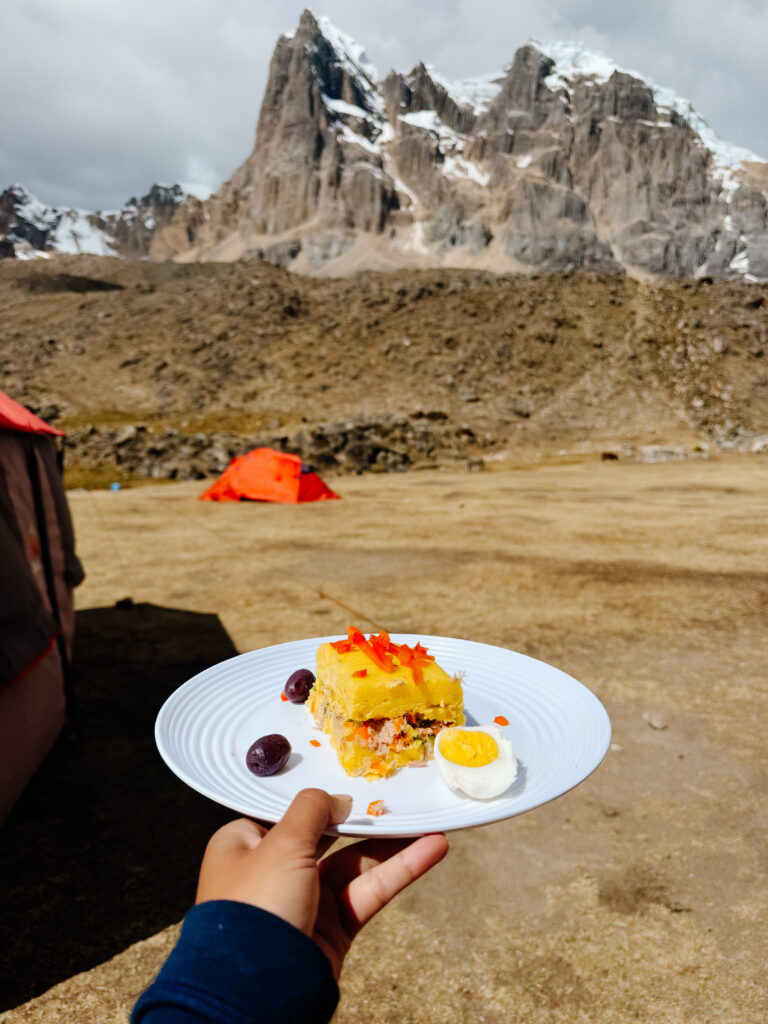
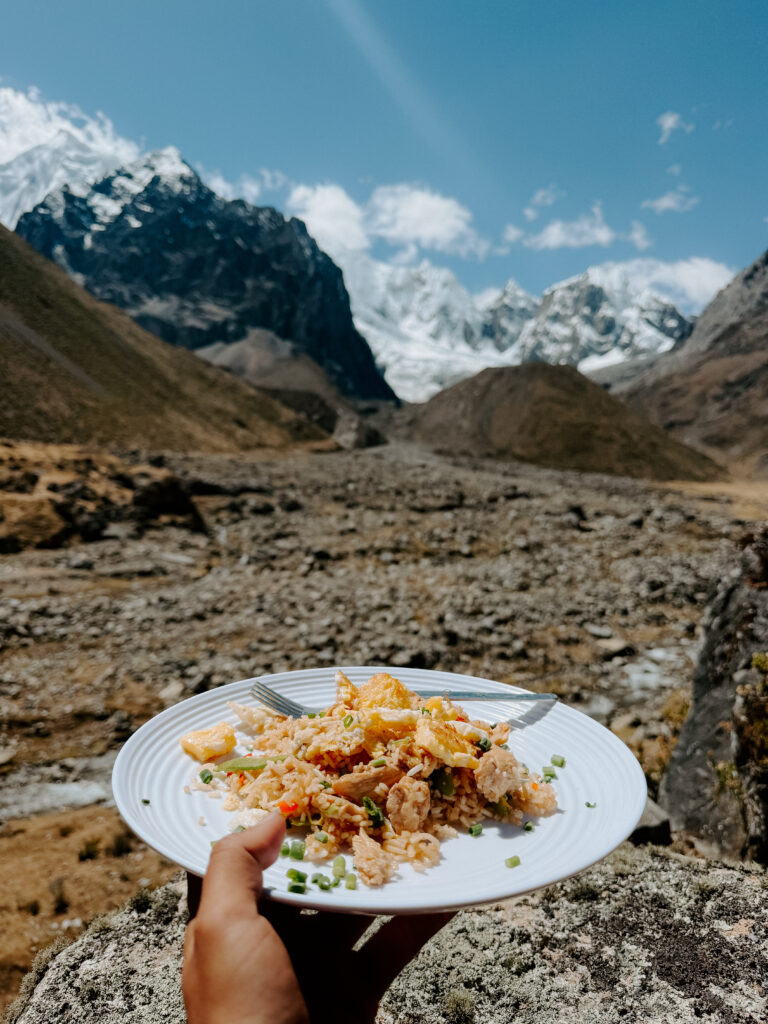
Ok, I know I said the campsites we’re a highlight earlier, but now it might be tied with the meals. Oh lord were we blessed to be eating such nutritious & delicious meals on the trek. The cooks from Inkaland made us breakfast, lunch, teatime snacks, and a 3-course dinner every night. Some examples of what we ate:
- Pancakes
- Omelettes
- Causa (a Peruvian layered potato dish)
- Fried Rice
- Lomo Saltado
- Cheese Wontons
- Pizza
- Arroz con Pollo (chicken & rice but it had this really delicious green sauce)
- Pasta
- Steak & Potatoes
They always changed it up, we never got sick of anything. If you’re vegetarian or have any dietary restrictions, tell your trekking company ahead of time and they will accommodate. We had a few vegetarians in the group and they subbed their meals accordingly.
So how hard could it be?
My friend Dasha described the Huayhuash trek perfectly on an Instagram post, some treks have one hard day but the Huayhuash continuously demands hard days. Btw you should follow her @dashaslens she’s an amazing photographer & posts helpful travel tips!
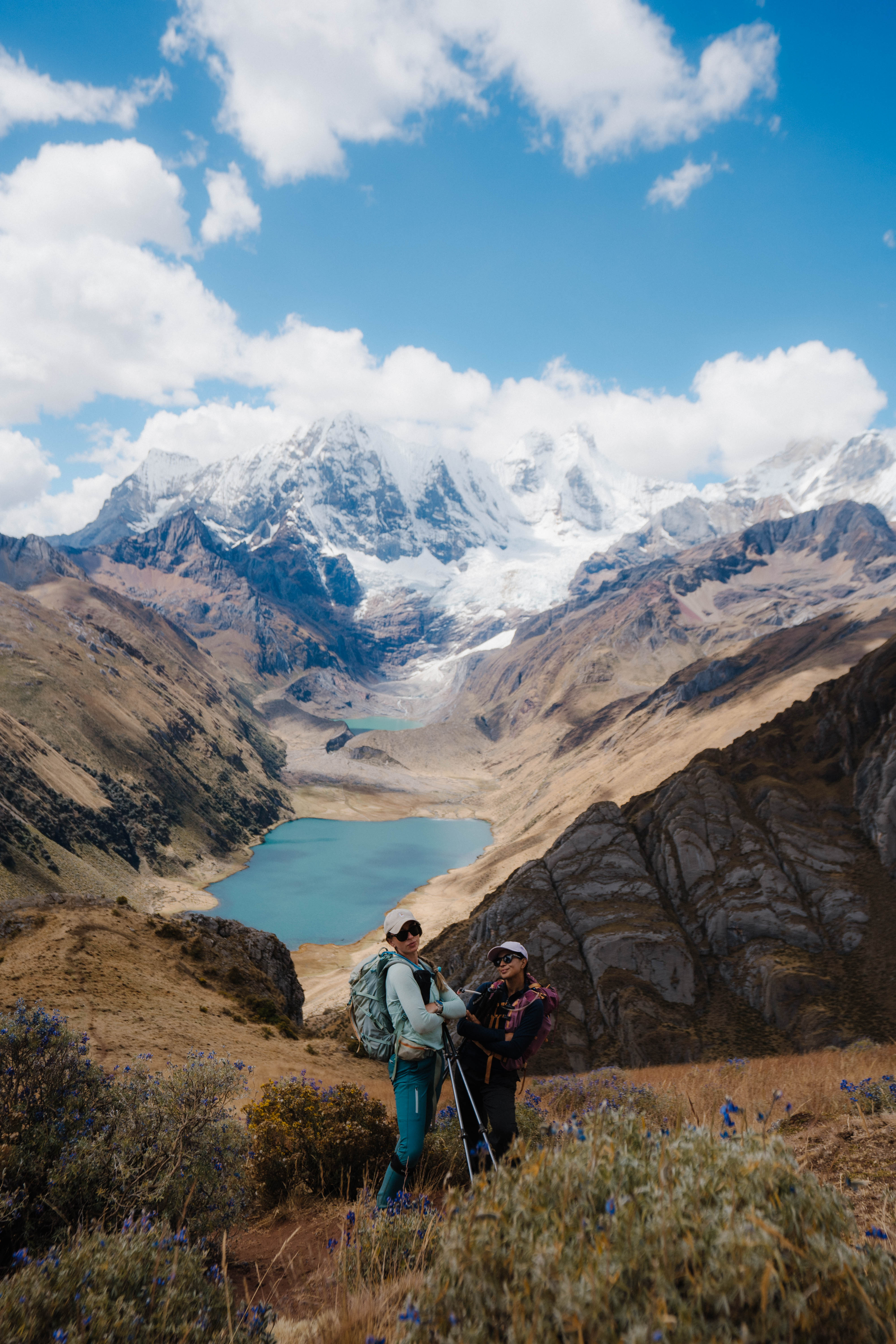
There was never a point on the trek where I felt like I couldn’t do it but the continuous demands and early wake up calls can definitely add up if you’re not used to this level of activity. Some passes are well over 16,000 ft so it can be slow going but I found the descents to be more brutal. You’re constantly going up and down 4,000 ft so it can take a toll on your toes & knees.
The End of the Journey
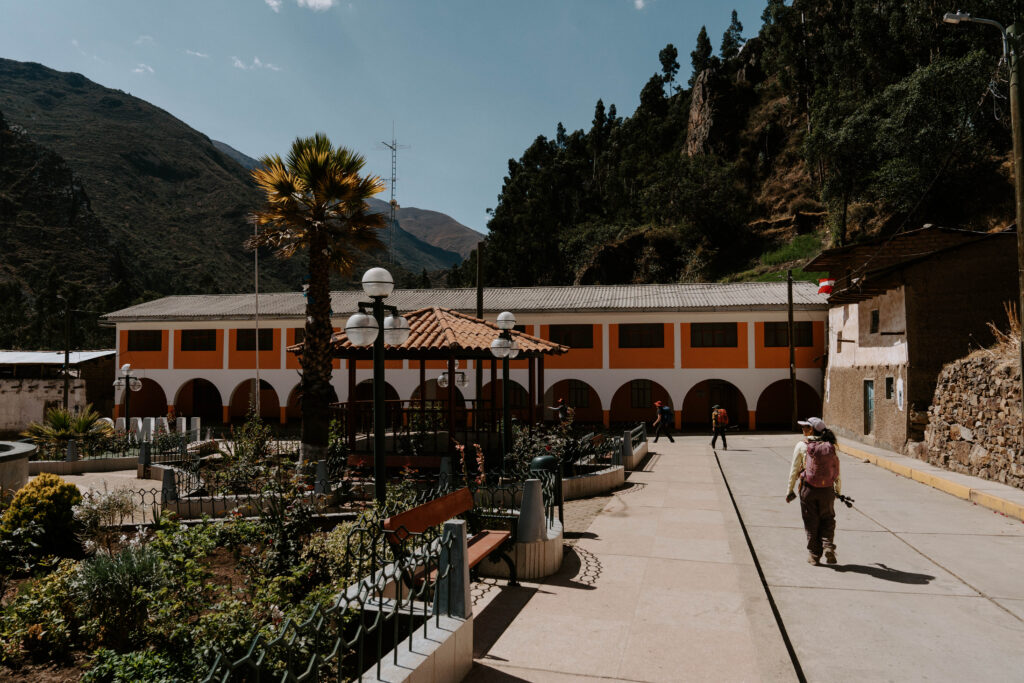
Even though this was supposed to be the easiest day, the last descent for some reason was particularly hard for me. It might have something to do with me getting a fever the night before so I was quite irritable. Some cows blocked a narrow section of the trail too making it difficult to get through. Dasha, who was following closely behind almost got pooped on which normally I’d laugh about but I was at my wits end. The hike down was painful too considering I had about 5-6 blisters on my feet. By the time I made it down to the town of Llamac, it didn’t even occur to me that the entire trek was over. It wasn’t until one of our guides Urbano gave me a hug and said “congratulations, you finished the Huayhuash”. Tears immediately rolled down my face, I was kind of sad it was over but so dang proud of myself for doing this.
The crew from Inkaland prepared a traditional Pachamanca lunch to celebrate which is a medley of meats & potatoes cooked under hot stones. It was the best send off ever. Our Canadian friends on the hike had to catch a night bus, for them it must have been an agonizing experience watching our meal slow cook for 2 hrs while they’re on a time crunch.
I hope this blog answers your questions and gives you a better idea of what it’s really like hiking the Cordillera Huayhuash. Feel free to reach out via Instagram dm if you have any additional questions! Thanks for being here and hope you get to experience the magical Huayhuash Trek 🙂
Keep the adventures going: Read my 2 week Guatemala Itinerary